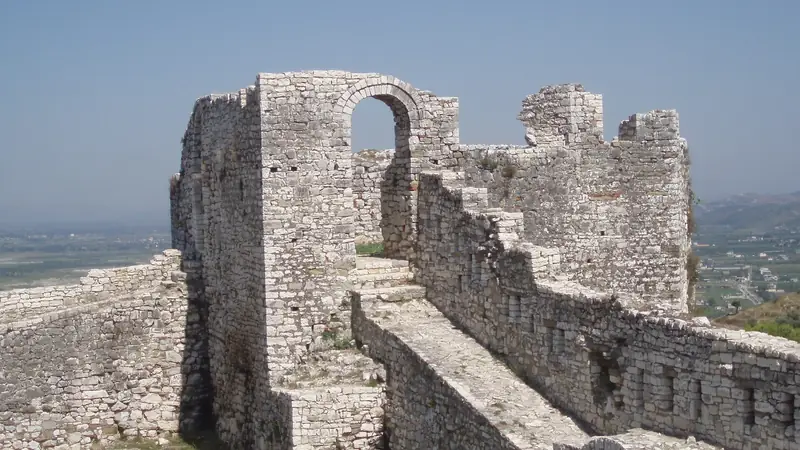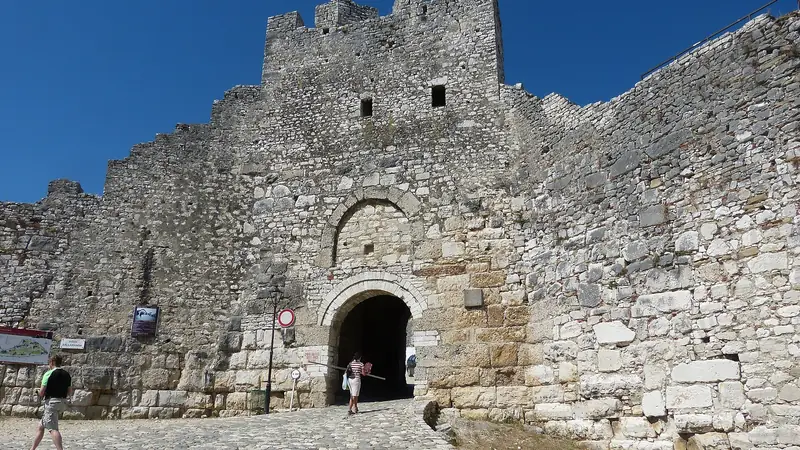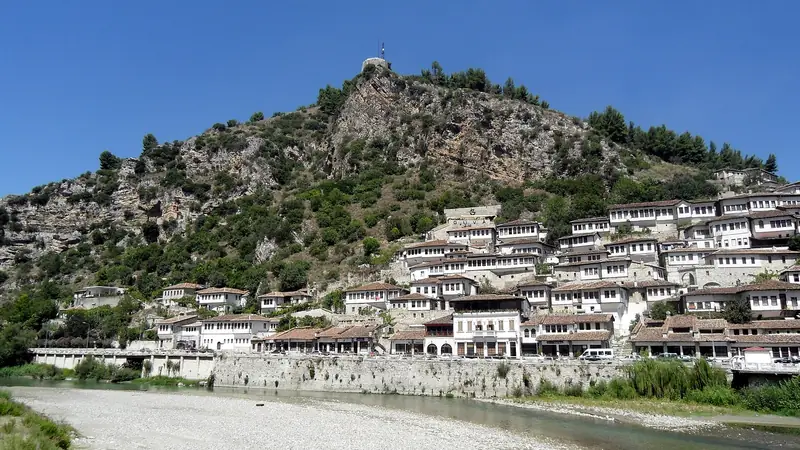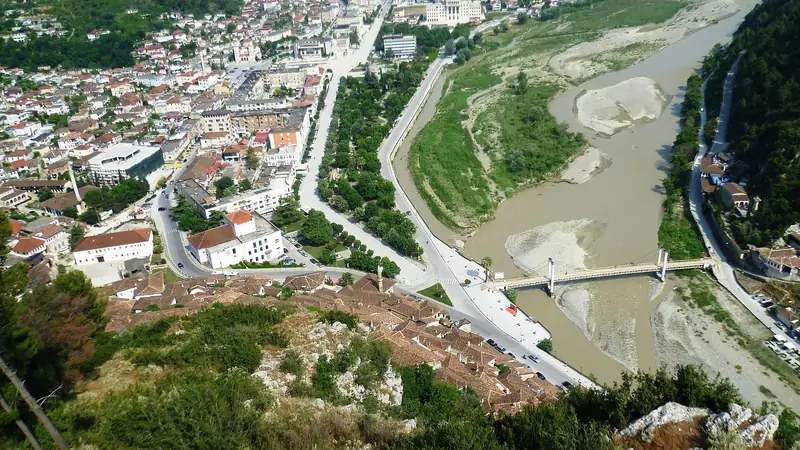
Berat’s historic centre is small enough to walk, which is why most guides combine the castle with the quarters below it. Wikipedia names three neighbourhoods in the old city: Kalaja on the castle hill, Mangalem at its foot, and Gorica on the left bank of the Osum. The nickname “town of one window above the other” refers to the way the houses climb the slope.
Mangalem
Wikivoyage places Mangalem below the castle on the south side of the river and calls it a traditionally Muslim area. The Ottomans took Berat in 1417 (Wikipedia), and Wikivoyage lists several mosques from that era, “starting from 1417”, including the Sahatit (Clock) Mosque and the Kuqe (Red) Mosque. It also lists the Berat Ethnographic Museum, in an 18th-century Ottoman house on the way up to the castle.
Gorica
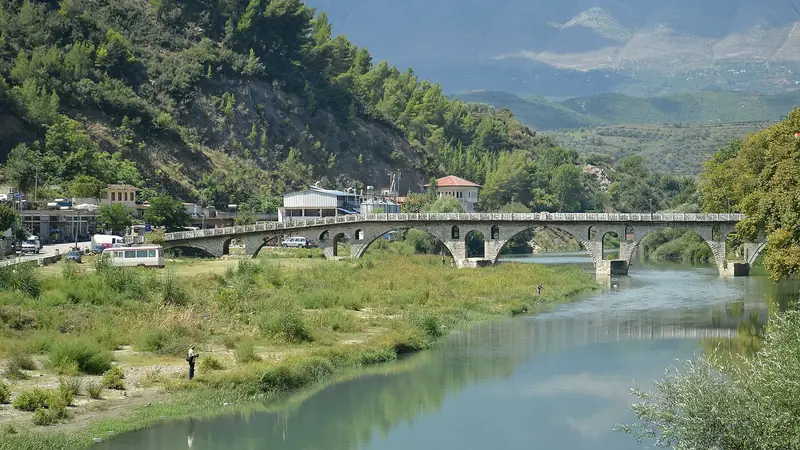
Gorica lies across the Osum and, according to Wikivoyage, is a traditionally Christian area. The Gorica bridge crosses the Osum between the two quarters, and from the Gorica bank you can see Mangalem and the castle hill together.
The castle quarter
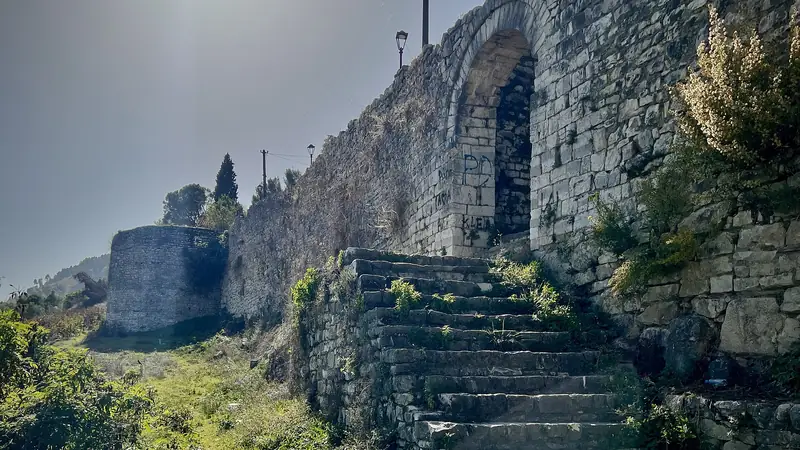
The climb from Mangalem to Kalaja is the steep part. Wikivoyage advises walking the quiet cobbled streets, which can lead you into courtyards. See the castle guide.
Eating
Wikivoyage lists local dishes such as rice with turkey (pilaf me kaposh deti), the Mont Blanc pastry, and local figs and olives, and marks Rus Restaurant as halal. We give no prices or opening times because those listings are dated.
Staying here
Wikivoyage’s sleep listings are mostly in Gorica and Mangalem, mainly private rooms in traditional houses plus hotels: see where to stay.
For a plan that links the quarters with the climb, read Berat in one day.
Frequently asked questions
What is the difference between Mangalem and Gorica?
They face each other across the Osum river. Mangalem is at the foot of the castle hill, south of the river, and Wikivoyage calls it a traditionally Muslim area. Gorica is across the water and Wikivoyage calls it a traditionally Christian area.
Which mosques are in Berat?
Wikivoyage lists several Ottoman-era mosques, starting from 1417, including the Sahatit (Clock) Mosque and the Kuqe (Red) Mosque.
Where is the Ethnographic Museum?
Wikivoyage says it is in an 18th-century Ottoman house on the way up to the castle. It gives no fee or hours.
Some links are affiliate links: if you book through them we earn a small commission at no extra cost to you. It funds the research behind this site.